 Image 1 of 3
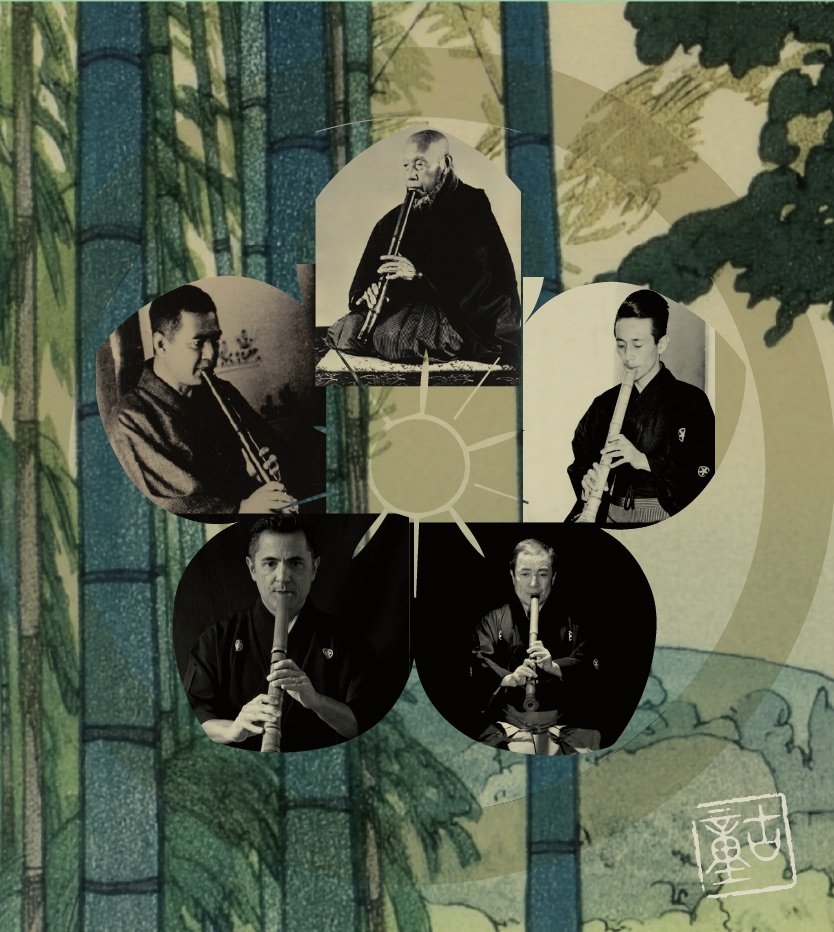 Image 2 of 3
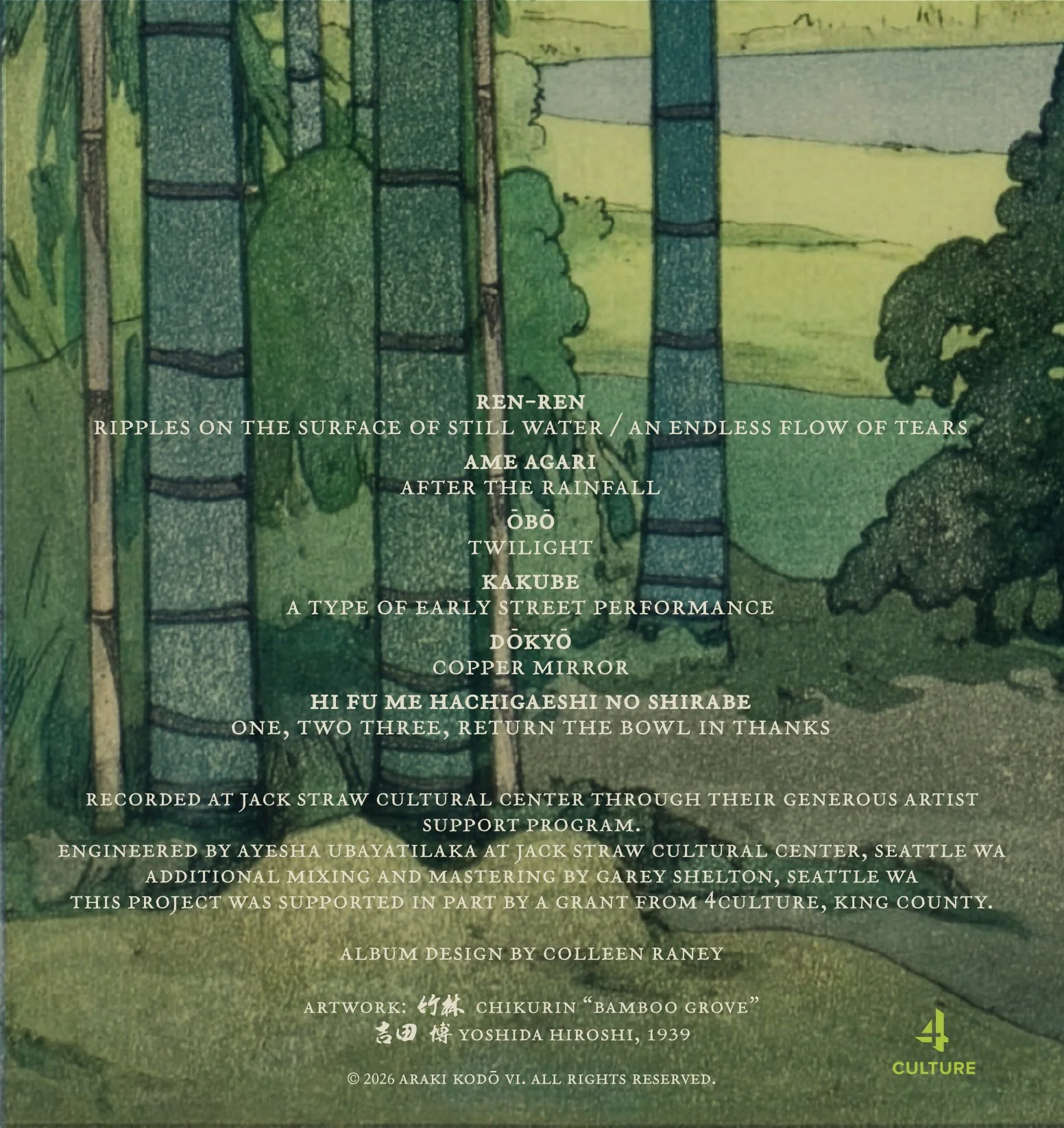 Image 3 of 3
about the album…
by Donald Braid, Ph.D, Professor of Folklore at Butler University, former student of Kodō V and current student of Kodō VI.
The shakuhachi flute and its distinctive sound are deeply intertwined with Japanese culture, history, aesthetics, and Buddhist practice. In physical form, it is a hollow bamboo tube with 5 finger holes. This seeming simplicity—shaped by hundreds of years of traditional wisdom regarding both making and playing the flute—makes possible the vast expressive range of the shakuhachi. In practice, skilled players avail themselves of broad freedom in breath, tone quality, pitch, scale, timing, and silence to achieve performances that are eloquent and deeply affecting.
The Kinko-ryū shakuhachi tradition has roots in the work of Kurosawa Kinko (1710–1771), a Komusō Monk of the Fuke sect of Zen Buddhism, who collected and compiled shakuhachi pieces played in temples across Japan. The thirty-six pieces he collected form the foundation of traditional honkyoku (original repertoire) of the Kinko-ryū school.
Tradition, however, is often misconstrued as static forms passively handed down from generation to generation. It is more useful to think of tradition as the process of culture—a process wherein performers choose to invoke a meaningful past as they act to create the future. In this sense the opposite of tradition is not change. Creativity and innovation have always been part of the process of tradition. While the pieces in the Kinko-ryū honkyoku tradition provide an indispensable reservoir, the structures, patterns, sounds, techniques, and meanings that comprise the tradition can also be drawn upon to express new ideas. This recording is a quintessential embodiment of both the richness of the Kinko-ryū honkyoku tradition and the ability of gifted masters to use and expand traditional resources in their art.
Hanzaburō Araki (Araki Kodō VI), hereafter Hanz, was named for his great-great grandfather, Araki Hanzaburō (Araki Kodō II, Chikuō). In continuation of the direct line of transmission from Kinko Kurosawa and from father to son in the Araki family, Hanz studied shakuhachi with his father Araki Tatsuya (Araki Kodō V, Chikuō II). Having the privilege of being a student of both Araki Kodō V and now Araki Kodō VI, it is pleasing for me to see Hanz has inherited the wealth of traditional knowledge passed down in the Araki family and his father’s lucid playing and humility.
Hanz selected both inherited and original pieces for this recording. Given the continuity of the structure, motifs, and style of these pieces with the Kinko-ryū tradition, I suggest the original pieces are a contiguous part of the tradition. The recordings evince Hanz’s virtuosity as a composer and performer. They are also an homage, commemorating both the Kinko-ryū shakuhachi tradition and the role of the Araki lineage within this tradition.
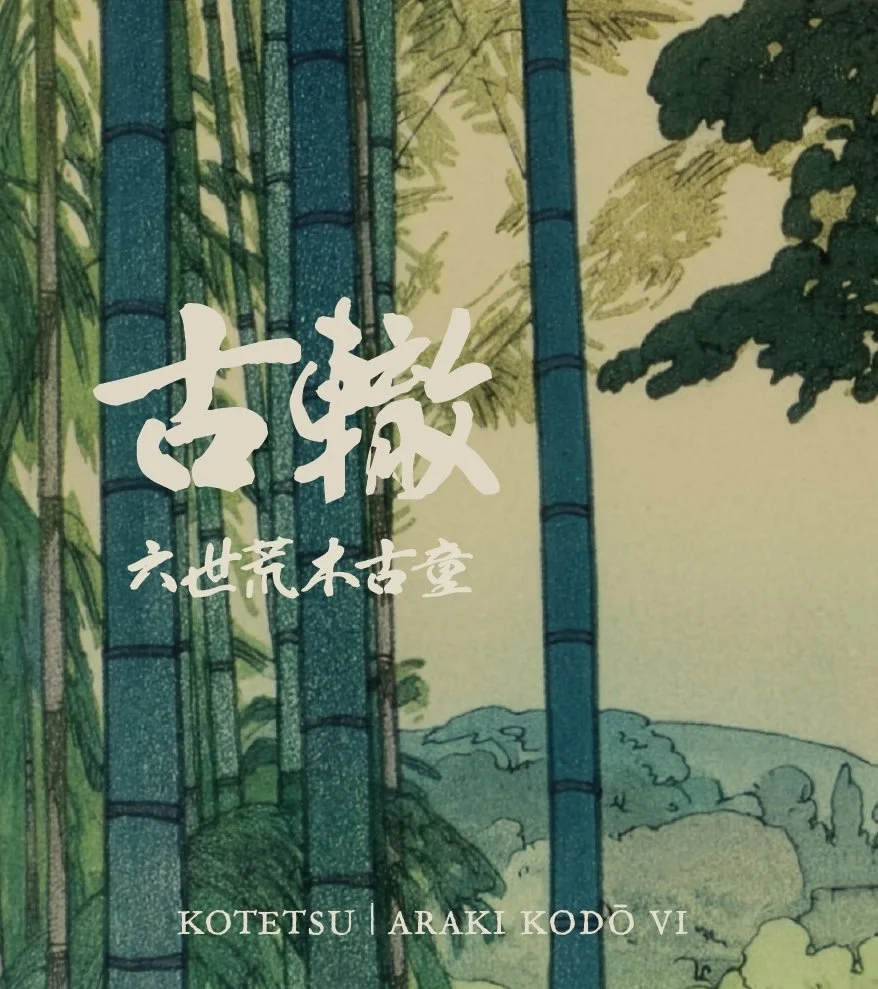
The album’s title—Kotetsu (古轍) ("the old way" or "path")—provides a framework for his celebration of creativity, tradition, and family. In choosing this title Hanz references a line in Hōkyō Zanmaika : Song of the Precious Mirror Samâdhi, a teaching poem in Zen Buddhism:
要合古轍 請觀前古
Kotetsu ni kanawan to yōseba kō zenko o kanzeyo/ "If you want to follow in the ancient tracks, please observe the sages of the past."
This reference does not recommend imitation of the past but rather reminds us that memory and traditional wisdom are valuable resources for creating meaning in our own lives, families, and communities. In drawing upon the Kinko-ryū tradition and the contributions of the Araki family in the pieces he composes and performs in this recording, Hanz offers us an opportunity to contemplate the “sages of the past” as he chooses to follow and extend the “ancient tracks” and thereby commemorate people and principles that are at once personal, familial, and cultural.
As if this was not enough, a further thread links all these pieces, the Kinko-ryū tradition, and the Araki family into a cohesive whole. The flute that Hanz plays on this recording was made by Araki Kodō II in 1905.
Ren-ren, (漣々) is a commemoration of shakuhachi style and the tradition writ large, making use of and extending traditional techniques. Ren-ren can be translated as the ripples on the surface of still water; it can also mean an endless flow of tears.
Ame Agari (雨上がり) — after the rainfall is an interpretation of a haiku written by Araki Chikuō II. The stillness that follows the rainfall leaves an indelible mark on anyone who grew up in the Pacific Northwest, particularly in the era before dot coms and mega corporations.
Ōbō (黄暮) twilight completes the suite that use traditional techniques to interpret haiku written by his father Araki Kodō V.
Kakube (カクベ) is a piece that was composed by Araki Kodō IV and refers to a kind of street performance.
Dōkyō (銅鏡) – Copper Mirror was composed by Araki Kodō V in 1986and explores central ideas inherent in the tradition where not only pitch but also timbre is essential to the repertoire.
The choice to include Hi Fu Mi Hachigaeshi no Shirabe (一二三鉢返の調) is rich with meaning. 1) These two pieces (typically played together) are fundamental pieces in the Kinko-ryū honkyoku repertoire. 2) The title Hachigaeshi is often translated as “Returning the Bowl” and carries the idea of playing a blessing in response to alms (or traditional wisdom) received. There is also a direct tie to the Araki family in that Araki Kodō II composed a line (one of four) of the piece that is enshrined in the Kinko-ryū repertoire.